

Your Current Position: PRODUCTS > Basic chemical
Search

Magnesium Carbonate
Magnesium Carbonate, is an inorganic salt that is a white solid. Several hydrated and basic forms of magnesium carbonate also exist as minerals.
Magnesium Chloride
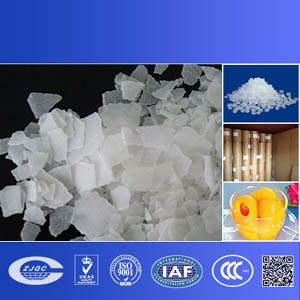
Magnesium Chloride, CAS# 7791-18-6, is recognized by many medical professionals as the “Master Magnesium Compound” for both dietary and topical uses, due to its high potency and efficient action.
Magnesium Hydroxide
Magnesium Hydroxide, Magnesium hydroxide. Magnesium hydroxide is the inorganic compound with the chemical formula Mg(OH) 2. It occurs in nature as the mineral brucite. It is a white solid with low solubility in water ( Ksp = 5.61×10⁻¹² ). Magnesium hydroxide is a common component of antacids, such as milk of magnesia, as well as laxatives .
Magnesium Oxide
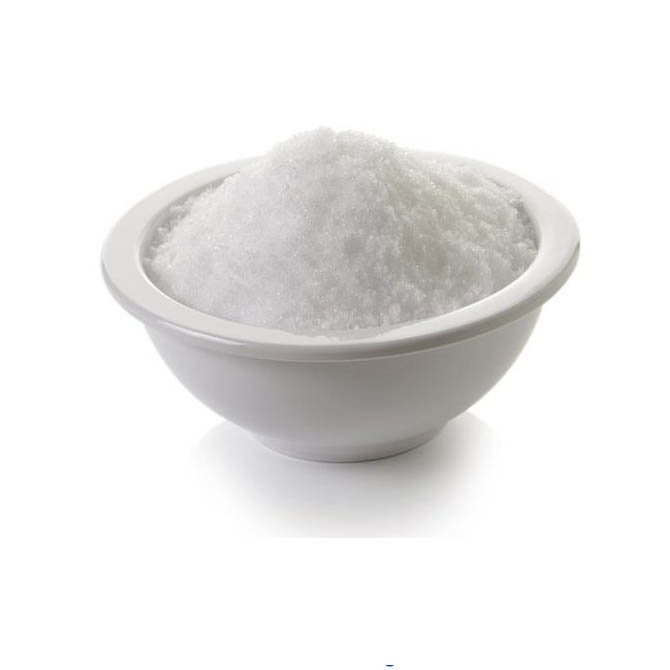
Magnesium Oxide, is a mineral supplement used to treat or prevent low levels of magnesium in the blood. Magnesium is important for many systems in the body, but it is especially vital for healthy muscles and bones. Some people use magnesium oxide to relieve heartburn or indigestion.
Methyl Cellulose
Methyl Cellulose, is a kind of non-ion aqueous cellulous ether, white or white-similar powder or granule, no odor or taste, nontoxic, with a little hygroscopicity
Monosodium Phosphate
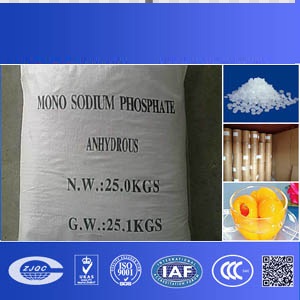
Monosodium Phosphate, CAS# 7558-80-7, MSP also known as anhydrous monobasic sodium phosphate and sodium dihydrogen phosphate, is an inorganic compound of sodium with dihydrogen phosphate (H2PO4−) anion. One of many sodium phosphates, it is a common industrial chemical. It exists as an anhydrous salt, as well as mono- and dihydrates.
Polyacrylamide
Polyacrylamide abbreviated as PAM, is a linear polymer which is one of the most widely used varieties of water-soluble polymer compounds. Polyacrylamide and its derivatives can be used as effective flocculants, thickeners, paper enhancers and liquid drag reducers, etc., widely used in water treatment, paper making, petroleum, coal, mining and metallurgy, geology, textile Industrial sectors such as construction. Insoluble in most mailing solvents, it has good flocculation and can reduce the frictional resistance between liquids. According to the ion characteristics, it can be divided into three types: cationic, anionic and nonionic.
Potassium Metabisulfite
Potassium Metabisulfite, was colorless crystal or white crystalline powder with the relative density of 2.34 .The melting point was 150-190oC(decomposition). The product had a flavor of sulfur dioxide and soluble in water with acidic aqueous solution, it was not soluble in ethanol. Sulfur dioxide was released from acidic solution and oxidized to sulfate in the air.
Potassium Metaphosphate
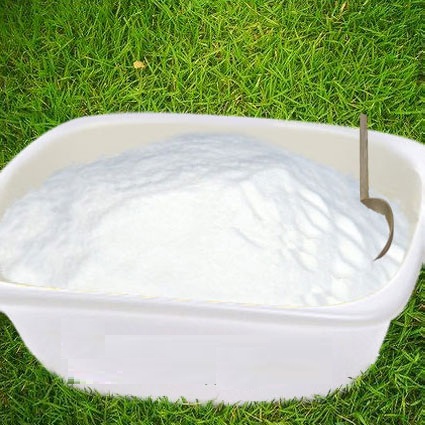
Potassium metaphosphate used as an emulsifier, water soften agent, a food additive and a fungicide, mainly used in seafood flavors. Keep in cool dry place. Potassium metaphosphate Alias is Metaphosphoric acid, potassium salt, Potassium polymetaphosphate
Salicylic Acid
Salicylic Acid is a plant willow bark extract, and also a natural anti-inflammatory drugs. Salicylic acid commonly used in the treatment of various chronic skin diseases in dermatology, such as acne (acne), ringworm and so on.
Silicon Dioxide
Silicon Dioxide has high chemical purity, strong adsorption, good dispersion performance, thermal resistance, electrical resistance, etc., with its excellent stability, reinforcing line, thickening and thixotropy, so it is in many disciplines. And the unique characteristics of the field have an irreplaceable role.
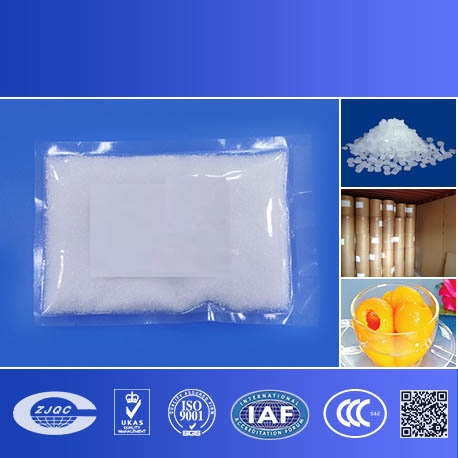
Sodium Bicarbonate
Sodium Bicarbonate CAS No.: 144-55-8, EINECS No.: 205-633-8.
Sodium Bicarbonate other names: Baking soda, bicarbonate of soda, nahcolite, sodium bicarbonate, sodium hydrogencarbonate
Molecular formula: NaHCO3
Sodium Bicarbonate other names: Baking soda, bicarbonate of soda, nahcolite, sodium bicarbonate, sodium hydrogencarbonate
Molecular formula: NaHCO3